
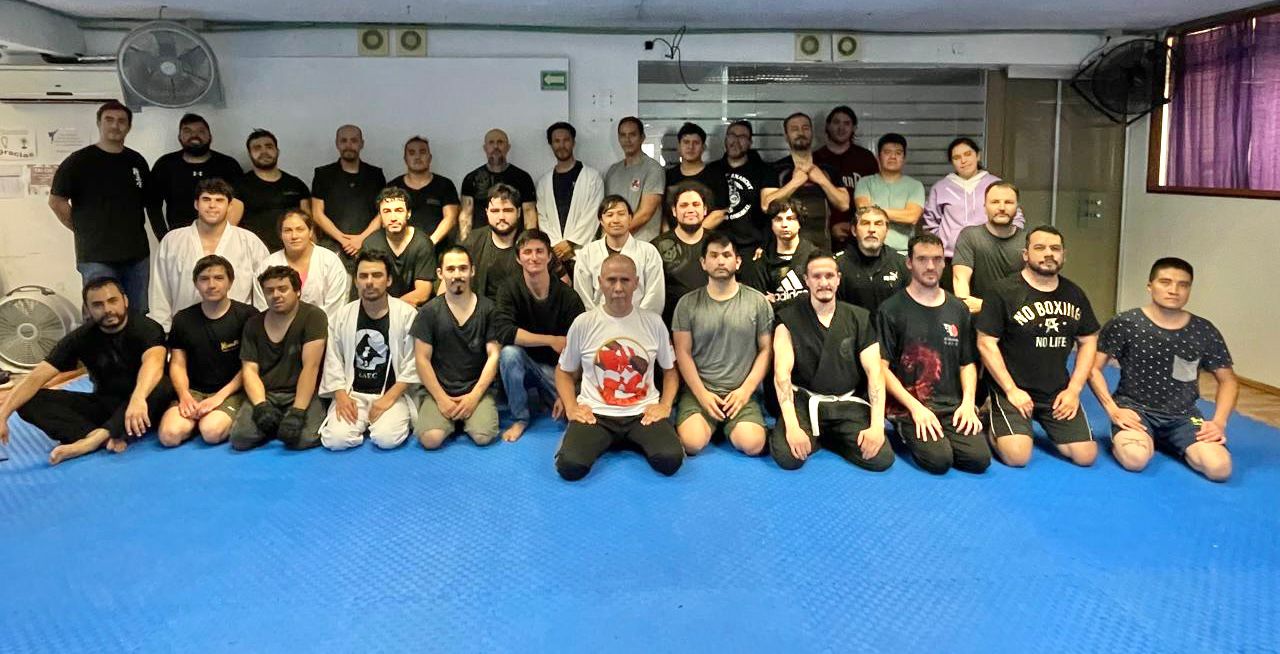
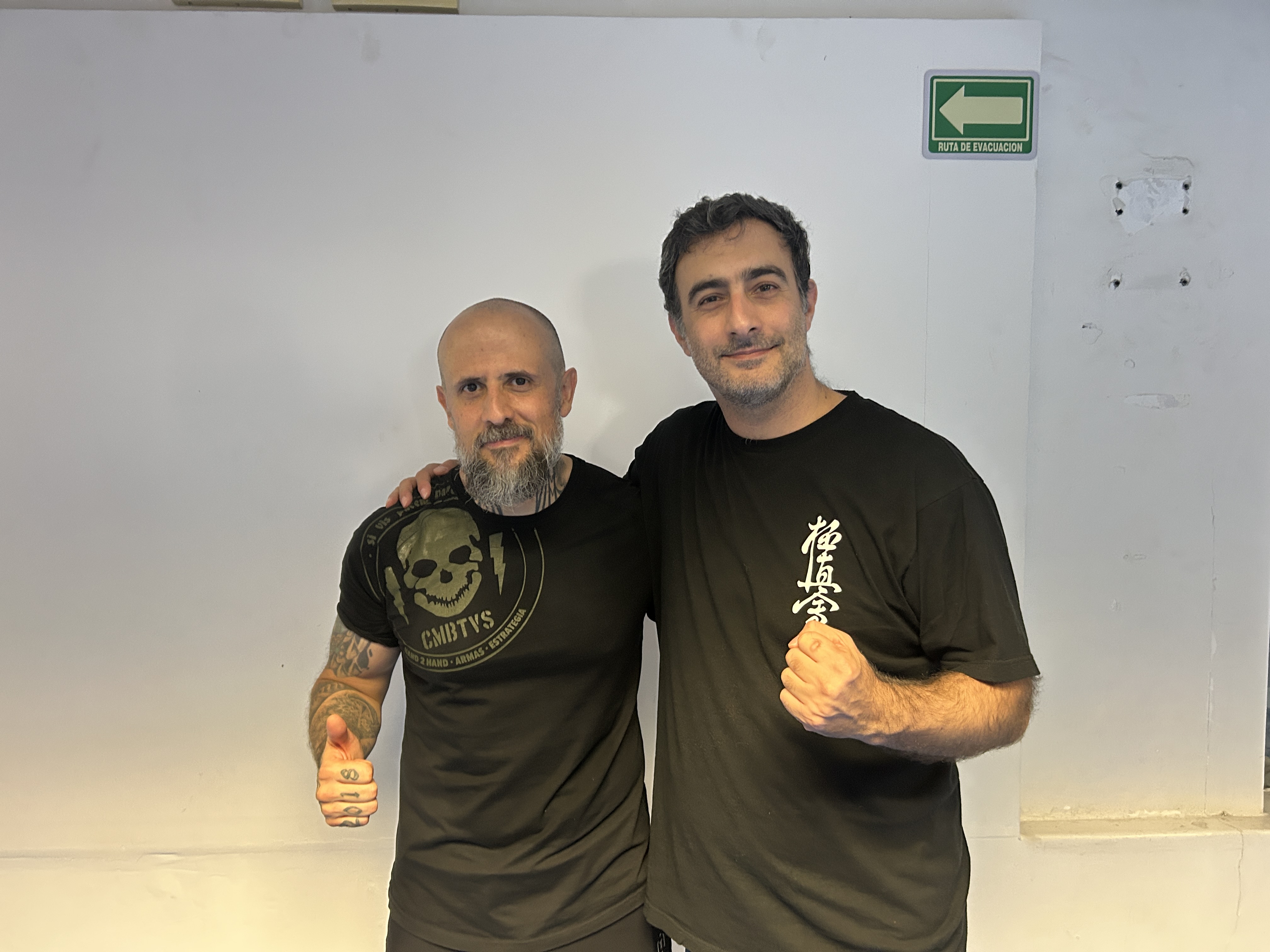
On July 25, 2025, I attended Bruno Orozco Sensei's Combatives seminar in Mexico City.
I had recently had back surgery. I could not get on the mat. I stayed at the side, taking notes and video. Even so, it was an excellent seminar. You learn a great deal when you have to watch.
The work was not a collection of techniques to memorize. It was a way of thinking about self-defense when there is no referee, no rule set, and no time to pick the perfect variation.
In that context, large motor skills matter more than fine ones. A few techniques, done well. If someone is too much, do not get stuck in front: take the back, and to take the back you need a clear path through the side.
Larger surfaces matter more than small targets: a thigh, not a knee. Different weapons for different distances. Use both hands. And do not give away your posture.
Strikes are not the end. They open the grappling. If something does not work, do something else. Control distance with your arms. Grabbing is dynamic. The feet keep your structure and your base.
Fighting happens at close quarter. When you cannot move away, drive in. Blocking punches in the street is very difficult. You have to be quick and violent.
In knife defense, the goal is not an elegant technique: it is to reduce the assailant's mobility. Knife attacks are fast. You have to move faster and hit harder. The mindset is simple: don't grab me, don't push me. If someone already has a hold, interrupt that grab immediately.
The best advice Sensei Orozco offered was also the clearest:
Be fit, keep training and practicing. It will only help. Strength is very important; technique alone is not enough. Aim to be Strong and Capable.
I learned a great deal from the sidelines. I look forward to taking part on the mat as soon as I physically can.
More Combatives material from Bruno Orozco Sensei is in this YouTube playlist:
Open the full playlist on YouTube →
Bruno Orozco Sensei and Academia Central Combatives:
- Bruno Orozco Sensei on Instagram →
- Combatives on Patreon →
- Academia Central Combatives on Facebook →
This review was first published on Train. Adapt. Endure.